Since 2003 alongside allergists, hospitals and research

Less time on data.More time with patients.

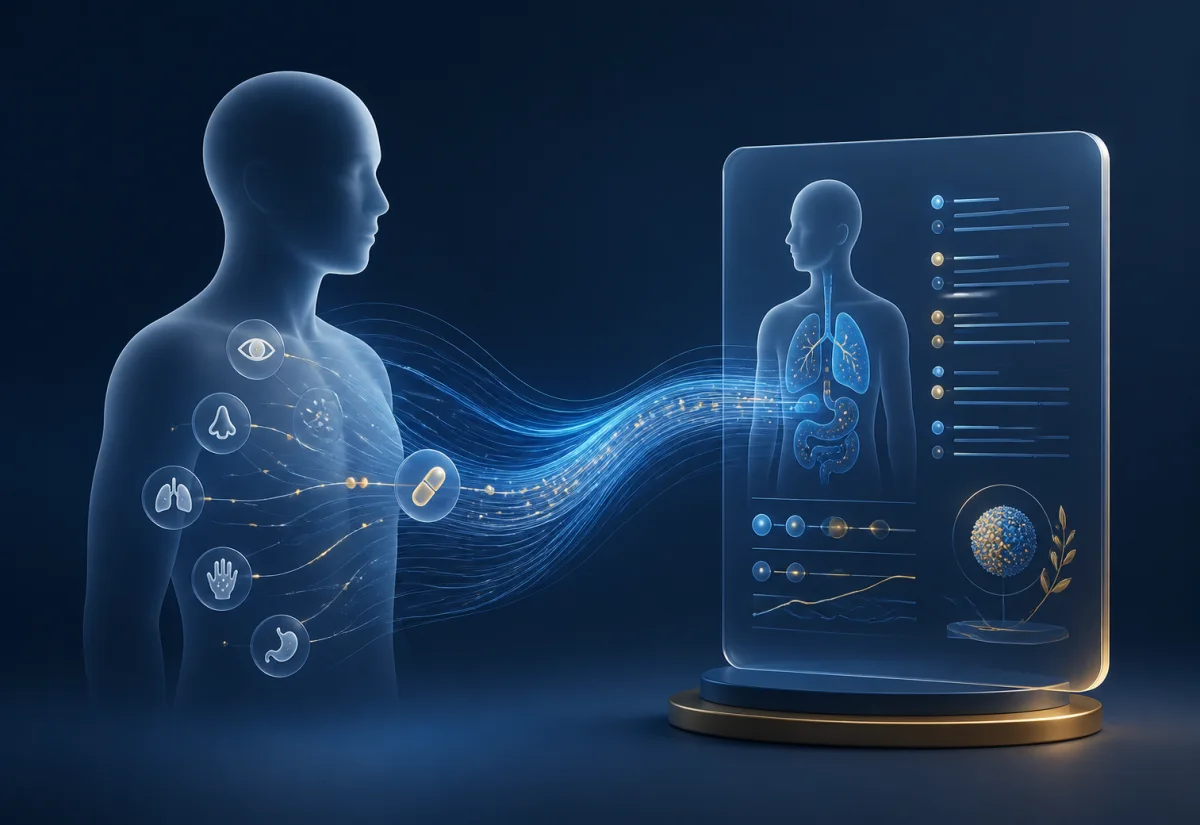
TPS platforms collect, structure, and analyze allergy patient data: from electronic symptom diaries to specialist clinical records and decision support. Medical software co-designed with allergists, compliant with GDPR.

  • Over 20 years in digital allergology
  • 6 platforms and apps in clinical use
  • AllergyPlan in CE IIa certification
  • GDPR-compliant infrastructure
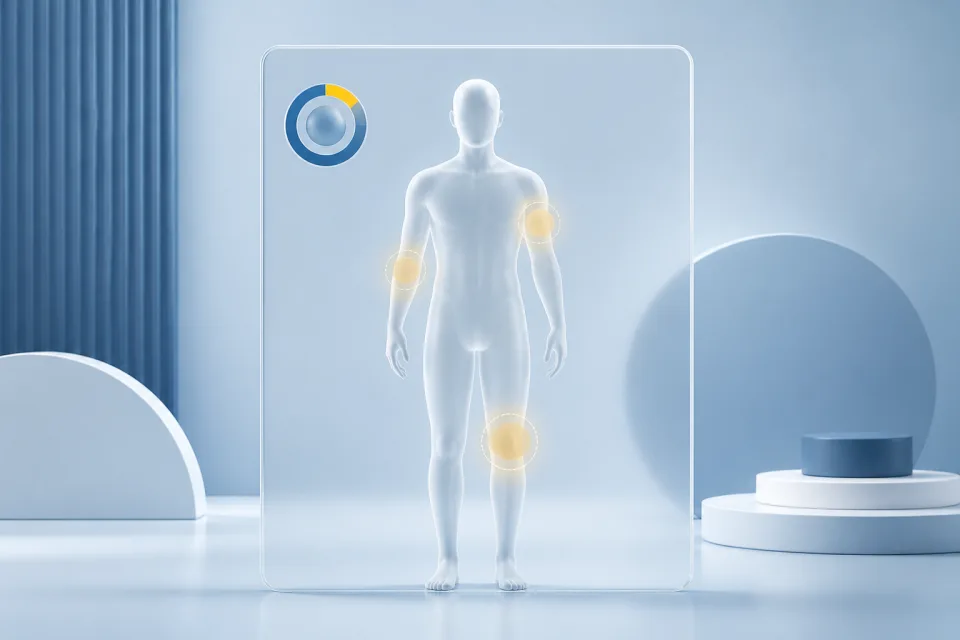
I segnali quotidiani del paziente vengono trasformati in un quadro clinico strutturato

2003

Year founded: an allergist and a computer engineer

6

Clinical platforms & apps in active use, not prototypes

6

Supported languages: Italian, English, German, French, Spanish, Portuguese

CE IIa

Medical device certification in progress for AllergyPlan

The problem

Allergy data is fragmented. And it carries a heavy cost.

Paper records, scattered PDFs across different folders, symptom diaries relying on patient memory, and unmeasured immunotherapy adherence. The result is a consultation that starts from scratch every time, non-comparable data, and clinical trials losing statistical power.

Paper-based history

Scattered PDF reports across different folders. Clinical history has to be reconstructed at every visit instead of simply consulted.

A diary held together by memory

Symptoms and medications recounted verbally in the clinic, not recorded the moment they happen.

Adherence nobody measures

No one really knows how closely a patient follows immunotherapy between one visit and the next.

Data that can't be compared

Free text instead of standardized scores: trials lose statistical power over data quality, not sample size.

About us

Founded by an allergist and an engineer, not a business plan

TPS Production was founded in Rome in 2003, where someone who saw the problem on the clinic floor — allergy data lost between one visit and the next — met someone who knew how to build the software to fix it.

Twenty years later the setup is the same: every platform comes from a request by someone who actually uses it in clinic, not from a product team far from the ward. We don't hand over software and step away — we stay alongside the allergists, hospitals and research groups we work with, through configuration and daily use alike.

A diary nobody fills in is useless to anyone: reducing the friction of logging was the first problem to solve, not the last.

The principle behind every screen we design

Who we serve

Four stakeholders, one unified data architecture

The same platforms address very different needs depending on who uses them. Here is what changes concretely for each.

Allergists & clinical centers

Arrive at visits with ready-to-use data

  • Patient-completed symptom and medication diary
  • Automated RTSS and Asthma Score calculations
  • SLIT adherence tracking over time
  • Direct doctor-patient communication
Hospitals & health systems

A specialist record that communicates with your systems

  • Multilingual allergology record (IT, EN, DE)
  • Back-office for the entire medical team
  • Telemedicine and remote monitoring
  • Modular architectures and cloud solutions
IVD & pharma enterprises

Your diagnostic tests inside the clinical pathway

  • Diagnostic panels integrated into reporting
  • Molecular diagnostics visualization
  • Aggregated and anonymized usage data
  • Customization and white-label options
Research & clinical trials

Structured datasets from day one

  • Standardized longitudinal data collection
  • Instant Excel export for statistical analysis
  • Treatment period cloning
  • Study design and AI-assisted analysis support

The platforms

Six tools covering the complete clinical and real-world pathway

From daily patient symptom tracking and immunotherapy adherence to clinical decision support. Each platform operates standalone and integrates with the others.

Visualizzazione del diario digitale AllergyMonitor
6 Languages (IT·EN·DE·FR·ES·PT) · Mobile app + web

AllergyMonitor

The electronic diary for allergy patients

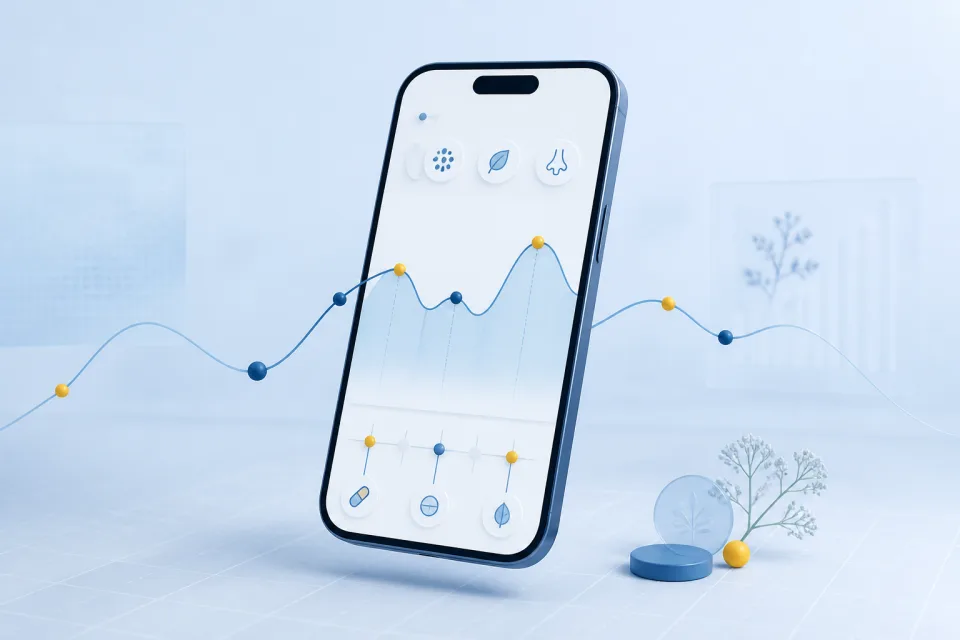
Patients with allergic rhino-conjunctivitis and asthma record daily symptoms and medication intake with immediate graphical symbols. The physician receives a clinical back-office with real treatment trends, not a rushed waiting-room summary.

  • Daily or weekly logging
  • Pharmacological therapy & immunotherapy
  • Graphical analytics: RTSS and Asthma Score
  • Integrated doctor-patient chat
  • Available in 6 languages: IT, EN, DE, FR, ES, PT
  • iOS & Android apps with secure personal login
Visualizzazione della cartella clinica AllergyCard
Italian · English · German

AllergyCard

The allergist's specialist clinical record

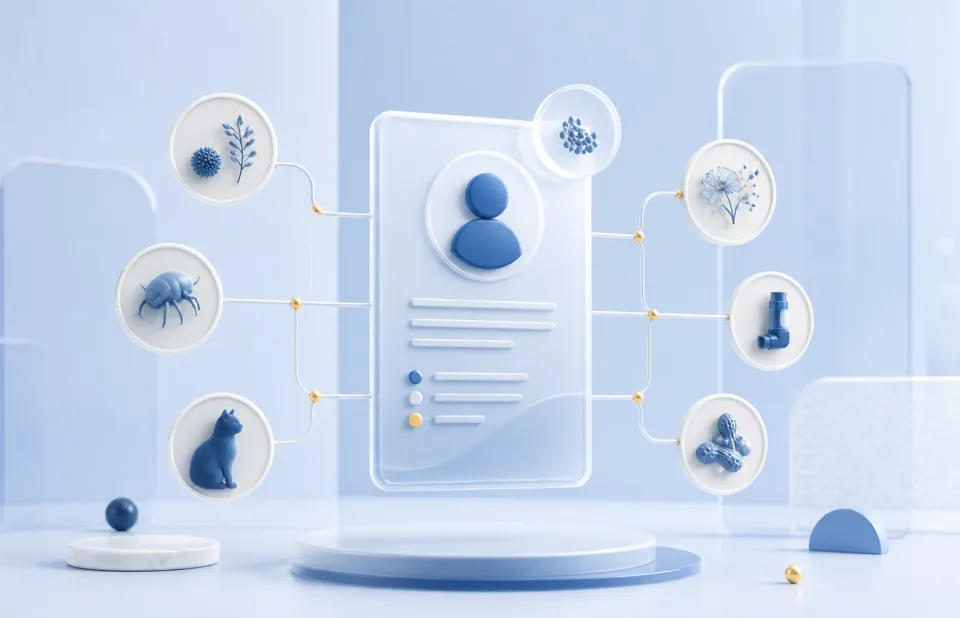
Centralizes all allergy patient clinical information into a single screen. Diagnostic severity and reliability are legible at a glance with colored bars and circles. Navigation follows a mouse-driven tree structure with zero mandatory text fields.

  • Complete clinical history in a single view
  • Severity and reliability represented visually
  • Tree structure, mouse-driven data entry
  • Access to updated drug and allergen databases
  • Native multilingual interface
  • Fast entry compatible with clinic schedules
Visualizzazione del supporto decisionale AllergyPlan
CE Class IIa certification in progress

AllergyPlan

Data analysis and clinical decision support

The intelligent platform combining data streams from the others and interpreting them. Artificial intelligence algorithms support the clinician without replacing professional judgement: the recommendation remains a suggestion, responsibility stays with the physician. Currently undergoing CE Class IIa certification as a medical device.

  • Integrated patient data synthesis
  • Algorithmic diagnostic support
  • Medical device certification pathway
  • Designed for IVD diagnostic integration
Visualizzazione della valutazione digitale ScoradCard
Version 2.0

ScoradCard

SCORAD calculated by sketching on screen

In atopic dermatitis, estimating lesion extent is subjective, slow, and hard to reproduce across clinicians. ScoradCard solves this by letting clinicians sketch lesions directly on a digital anatomical model, automatically calculating body surface area and generating the SCORAD score.

  • Direct sketching on the digital body model
  • Automated lesion surface calculation
  • SCORAD score generated and stored
  • Longitudinally comparable evaluations
Visualizzazione del monitoraggio terapeutico SlitMonitor
Mobile app iOS & Android

SlitMonitor

The specialized diary for Sublingual Immunotherapy (SLIT)

Dedicated application for patients undergoing Sublingual Immunotherapy. Enables precise daily intake recording, tracking of local/systemic adverse reactions, and long-term adherence monitoring, providing the specialist with a reliable clinical history.

  • Daily SLIT intake recording
  • Local & systemic reaction tracking
  • Longitudinal adherence analytics
  • Custom reminders and notifications
  • Direct data sharing with the allergist
  • Native app for iOS and Android
Visualizzazione della mappa collaborativa PollenTrace
Mobile app & Geotagging

PollenTrace

Real-time collaborative mapping of pollen allergy symptoms

Citizen-science mobile platform for patients with allergic rhinitis. Enables real-time well-being ratings on a Visual Analogue Scale (VAS) with anonymous geotagging, creating an interactive map of pollen impact across territories.

  • Instant Visual Analogue Scale (VAS) rating
  • Interactive map with anonymous geotagging
  • Correlation with pollen count calendars
  • Community-driven territorial monitoring
  • Personal symptom tracking history
  • Available on App Store and Google Play

Our approach

Four principles behind every platform

Continuous data, not snapshots

The patient tracks symptoms and medications between visits. The physician enters the clinic with the longitudinal curve already plotted, not a reconstructed story.

Structure, not free text

Standardized scores, diagnostic trees, and severity scales. Everything entering the system is comparable across patients, centers, and over time.

Built with practitioners

Every screen stems from an allergist's request. No mandatory fields beyond demographics: the software adapts to the rhythm of the visit, not vice versa.

Compliance by design

Data processing designed according to GDPR, and HIPAA where required. Security is not an afterthought.

Security & compliance

Clinical data stays where it belongs

We don't treat data protection as a feature bolted on at the end. It's part of the architecture from the first line of code.

GDPR by design

Processing of personal and health data is designed according to EU Regulation 2016/679 from the architecture up, not added afterwards.

HIPAA where required

In contexts that require it, the data processing setup is also compliant with HIPAA standards for health data protection.

Ownership stays with the provider

Clinical data remains under the exclusive ownership of the hospital, clinic or center that collects it. TPS acts as data processor, not data controller.

AllergyPlan in CE IIa certification

The decision-support platform is currently undergoing certification as a medical device under the European MDR regulation.

Updated regulatory documentation for each product is available on request.

How it is adopted

From analysis to daily practice

We don't hand over a license and wish you luck. Adoption is a supported journey, calibrated to your way of working.

01

Analysis

We map your actual clinical workflow and existing legacy software to see where data is currently lost.

02

Configuration

We configure platforms around your protocols, assessment scales, and institutional terminology.

03

Hands-on Launch

Medical team training, onboarding of first patients, and real-time adjustments during initial weeks.

04

Evolution

Periodic analytical reports, new feature rollouts, and ongoing support as your usage expands.

Beyond the platforms

When you need something that doesn't exist yet

The exact same engineering and clinical expertise that built our products is available as a professional service.

Custom Software Development

Web applications, mobile apps, and digital healthcare platforms for patient monitoring, telemedicine, and EMRs—designed from day one for GDPR and HIPAA compliance.

Data Science, Biostatistics & AI Models

We transform clinical datasets and telemetric streams into actionable scientific evidence and predictive algorithms. We assist research teams and pharma enterprises with advanced biostatistical analytics, longitudinal time-series structuring, and training and validating machine learning and AI models on real-world patient cohorts.

IT & Infrastructure Consulting

Redesign of hospital IT infrastructure, secure cloud solutions, database optimization, and modular software architectures.

Clinical Trial Consulting

Support with study design, standardized data collection, and research protocol management, generating robust Real-World Evidence (RWE) with AI-assisted statistical analytics.

Frequently asked questions

The questions we receive before getting started

Are the platforms certified medical devices?

AllergyPlan is currently in the formal CE Class IIa certification process as a medical device. Other platforms serve as clinical data collection, telemetry, and visualization tools supporting physician workflows without making autonomous diagnoses. Full regulatory documentation is available upon request.

How is patient data handled and protected?

Data processing is designed according to GDPR from the core architecture, and HIPAA where required. Each patient logs in with personal credentials and clinical data remains under the exclusive ownership of the treating healthcare institution.

Do the platforms integrate with existing systems?

Yes. We develop modular architectures and offer healthcare interoperability consulting. Integration scope depends on what your existing software exposes, which is assessed during the analysis phase.

How long does implementation take?

It depends on scope. A single allergology clinic starting with AllergyMonitor or SlitMonitor can be operational in a few days. A hospital integration with multiple departments requires a structured analysis and deployment plan.

Do patients actually manage to use the diary?

Yes—this was our primary design requirement. Symptom logging uses intuitive visual icons and takes under 45 seconds daily. Reducing recording friction was our very first problem to solve.

Do you collaborate with IVD diagnostic and pharmaceutical companies?

Yes. Our platforms provide the exact touchpoint where diagnostic test results translate into clinical decisions. We evaluate custom integrations, specialized modules, and white-label solutions on a case-by-case basis.

Let's talk

Tell us how you work today

Whether you are an outpatient clinic, a hospital management team, a diagnostic enterprise, or a research group, the starting point is the same: identifying where data gets lost. Write to us and we will respond promptly.

Direct contact form

Headquarters

Via Nomentana 352 00141 Rome, Italy

Phone

+39 06 9835 9388Mon-Fri 09:00 - 17:00

From first message to next step

A clear request deserves an equally practical response.

  1. 1We review your requirements, workflows, and context
  2. 2We involve the TPS person best suited to the topic
  3. 3We arrange a focused conversation or demo